Filter by
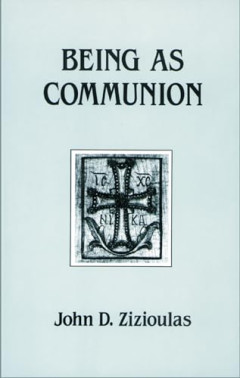
Being As Communion: Studies in Personhood and the Church
The voice of John Zizioulas may turn out to be the fresh voice for which theology and especially ecclesiology have long been waiting. In the context of a complete theology, which includes extended consideration of the major theological topics--the Trinity, Christology, eschatology, ministry, and sacrament, but above all, the Eucharist--the author propounds a fresh understanding, based on the ea…
- Edition
- -
- ISBN/ISSN
- 9780881410297
- Collation
- Softcover; 269 hlm.; 14 x 21 cm
- Series Title
- -
- Call Number
- F 262 Z825 C1

Friends and Friendship: The Secrets of Drawing Closer
"Many in the church are insulated from in-depth interaction of any kind," say Jerry and Mary White in Friends and Friendship. "We wish we could say that Christians don't experience this frustration in friendship. But we can't." God has placed within you a need for intimate companionship. When this need is unfulfilled, you're lonely. However, because of Christ's love you can deal with lonelin…
- Edition
- 1
- ISBN/ISSN
- 9780891095002 / 0891095004
- Collation
- Softcover; 191 hlm.; 13 x 23 cm
- Series Title
- -
- Call Number
- F 158.25 W585 C1
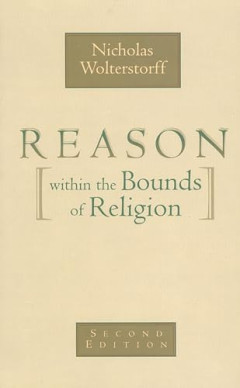
Reason Within the Bounds of Religion
Expanding on his 1976 study of the bearing of Christian faith on the practice of scholarship, Wolterstorff has added a substantial new section on the role of faith in the decisions scholars make about their choice of subject matter.
- Edition
- 2
- ISBN/ISSN
- 0802816045
- Collation
- Softcover; 161 hlm.; 12.5 x 20.3 cm
- Series Title
- -
- Call Number
- F 215 W86N C1
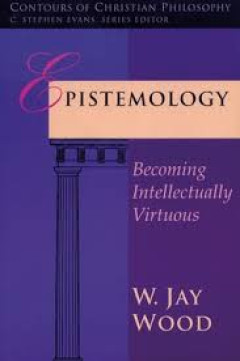
Epistemology Becoming Intellectually Virtuous
How do we know what we know? What have wisdom, prudence and studiousness to do with justifying our beliefs? Jay Wood begins this introduction to epistemology by taking an extended look at the idea of knowing within the context of the intellectual virtues. He then surveys current views of foundationalism, epistemic justification and reliabilism. Finally he examines the relationship of epistemolo…
- Edition
- 19
- ISBN/ISSN
- 0-87784-522-0
- Collation
- Soft Cover, 216 hlm, 14,8x22 cm
- Series Title
- Countours of Christian Philosophy
- Call Number
- F 230.01 W8811 C1
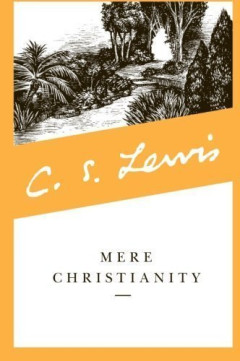
Mere Christianity
In 1943 Great Britain, when hope and the moral fabric of society were threatened by the relentless inhumanity of global war, an Oxford don was invited to give a series of radio lectures addressing the central issues of Christianity. Over seventy years after the original lectures, the topic retains it urgency. Expanded into book form, Mere Christianity never flinches as it sets out a rational ba…
- Edition
- -
- ISBN/ISSN
- 9780060652920
- Collation
- Softcover; 227 hlm.; 13.5 x 20 cm
- Series Title
- -
- Call Number
- F 230 L673 C1
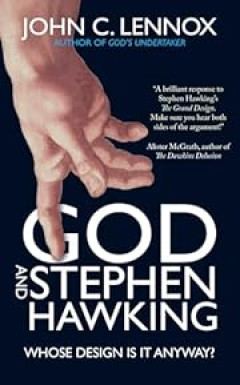
God and Stephen Hawking - Whose Design is it Anyway?
"The Grand Design", by eminent scientist Stephen Hawking, is the latest blockbusting contribution to the "New Atheist" debate, and claims that the laws of physics themselves brought the universe into being, rather than God. In this swift and forthright reply, John Lennox, oxford mathematician and author of "God's Undertaker", takes a closer look at Hawking's logic. In lively, layman's terms, Le…
- Edition
- -
- ISBN/ISSN
- 978-0-7459-5549-0
- Collation
- 96 hlm.; Soft Cover 11 x 17,5 cm
- Series Title
- -
- Call Number
- F 231.765 L568 C1

God's Undertaker: Has Science Buried God?
If we are to believe many modern commentators, science has squeezed God into a corner, killed and then buried him with its all-embracing explanations. Atheism, we are told, is the only intellectually tenable position, and any attempt to reintroduce God is likely to impede the progress of science. In this stimulating and thought-provoking book, John Lennox invites us to consider such claims very…
- Edition
- -
- ISBN/ISSN
- 9780745953717
- Collation
- Softcover; 224 hlm.; 13.5 x 21.5 cm
- Series Title
- -
- Call Number
- F 261.55 L568 C1

Vera Sapientia, or True Wisdom
Christian monk and mystic Thomas Hemerken, aka THOMAS À KEMPIS (1380-1471), wrote The Imitation of Christ, the second most important book, after the Bible, in Christian philosophy. But he also penned numerous other works of devotion, including this previously hard-to-find collection of contemplations for sincere, dedicated believers. Discover, in this 1904 translation. . the severe judgment of…
- Edition
- -
- ISBN/ISSN
- 1602060169
- Collation
- Softcover; 214 hlm.; 12.7 x 20.3 cm
- Series Title
- -
- Call Number
- F 210 K328 C1
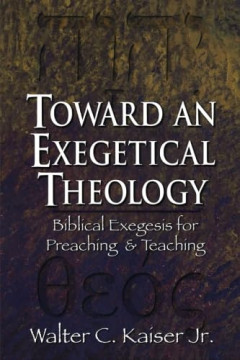
Toward an Exegetical Theology: Biblical Exegesis for Preaching and Teaching
Proposes a method of biblical interpretation consisting of contextual, syntactical, verbal, theological, and homiletical analysis.
- Edition
- -
- ISBN/ISSN
- 9780801021978
- Collation
- Softcover; 269 hlm.; 15.14 x 22.25 cm
- Series Title
- -
- Call Number
- R 220.601 K137 C1
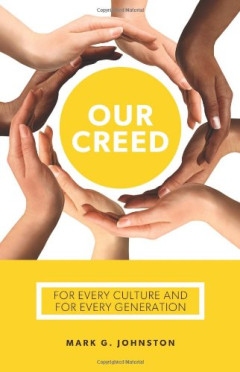
Our Creed: For Every Culture and Every Generation
The Apostles' Creed has united the church throughout her history. The engaging and pastoral style of?Our Creed?presents the creed in a fresh and appealing manner that speaks to our postmodern culture. By unfolding the creed's great scriptural truths and using helpful applications, compelling illustrations, and penetrating study questions, this book is the perfect tool for membership classes, sm…
- Edition
- -
- ISBN/ISSN
- 9781596384484
- Collation
- Softcover; 124 hlm.; 14 x 21.5 cm
- Series Title
- -
- Call Number
- F 238.11 J731 C1
 Computer Science, Information & General Works
  Philosophy & Psychology
  Religion
  Social Sciences
  Language
  Pure Science
  Applied Sciences
  Art & Recreation
  Literature
  History & Geography