Filter by
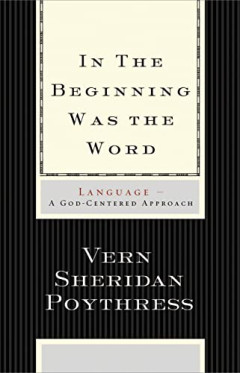
In the Beginning Was the Word: Language-A God-Centered Approach
Language is not only the centerpiece of our everyday lives, but it gives significance to all that we do. It also reflects and reveals our all-sustaining Creator, whose providential governance extends to the intricacies of language. Writes Vern Poythress, "God controls and specifies the meaning of each word-not only in English but in Mandarin Chinese, Hindi, Italian, and every other language. Wh…
- Edition
- -
- ISBN/ISSN
- 9781433501791
- Collation
- Softcover; 415 hlm.; 15.2 x 22.8 cm
- Series Title
- -
- Call Number
- F 230.014 P892 C1

Inerrancy and Worldview: Answering Modern Challenges to the Bible
Though the Bible presents a personal and relational God, popular modern worldviews portray an impersonal divine force in a purely material world. Readers influenced by this competing worldview hold assumptions about fundamental issues―like the nature of humanity, evil, and the purpose of life―that present profound obstacles to understanding the Bible. In Inerrancy and Worldview, Dr. Vern Po…
- Edition
- -
- ISBN/ISSN
- 9781433523878
- Collation
- Softcover; 170 hlm.; 15 x 23 cm
- Series Title
- -
- Call Number
- R 220.132 P892 C1

Certainty of the Faith: Apologetics in an Uncertain World
This book gives Christians greater confidence in their beliefs and tools to defend their faith in dialogue with postmodern man. It exposes the uncertainty of non-Christian thought, analyzes some of the best arguments of Christian apologists, and suggests answers to the most difficult questions we face.
- Edition
- -
- ISBN/ISSN
- 9781596380653
- Collation
- Softcover; 296 hlm.; 13.5 x 21.5 cm
- Series Title
- -
- Call Number
- F 239 R181 C1
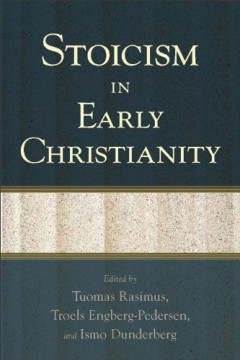
Stoicism in Early Christianity
How usefully do distinctly Stoic ideas illuminate the meaning of first and second century texts? This book suggests that early Christians—the authors of New Testament and noncanonical writings, including some early apologies—were often more influenced by Stoicism than by Middle Platonism. This insight sheds an entirely new light on the relationship between philosophy and religion at the bir…
- Edition
- -
- ISBN/ISSN
- 9780801039515
- Collation
- Softcover; 314 hlm.; 14.99 x 22.61 cm
- Series Title
- -
- Call Number
- F 261.2 R224 C1

Introduction to Francis Schaeffer
The aim of this guide is to help readers grasp Schaeffer's essential ideas through a study of his "trilogy" ; The God Who is There, Escape from Reason and He is Not Silent.
- Edition
- -
- ISBN/ISSN
- 0-340-14738-5
- Collation
- 61 hlm.; Soft Cover 12x 19 cm
- Series Title
- -
- Call Number
- F 230.5 S29F1 C1

Escape from Reason: A Penetrating Analysis of Trends in Modern Thought
Truth used to be based on reason. No more. What we feel is now the truest source of reality. Despite our obsession with the emotive and the experiential, we still face anxiety, despair, and purposelessness. How did we get here? And where do we find a remedy? In this modern classic, Francis A. Schaeffer traces trends in twentieth-century thought and unpacks how key ideas have shaped our society.…
- Edition
- -
- ISBN/ISSN
- 9780830834051
- Collation
- Softcover; 124 hlm.; 10.7 cm x 17.7 cm
- Series Title
- -
- Call Number
- F231.042 S29F1 C1

The Secret Vaults of Time: Psychic Archaeology and the Quest for Man's Beginn…
The Tutankhamen exhibition draws unprecedented crowds around the world; archaeology classes at the universities are subscribed to overflowing; Margaret Mead is a household name; and Roots becomes an instant bestseller. All this testifies to the overwhelming desire we all have to know about our pasts, about the civilizations that formed us, and about the cultures that our ancestors created. Un…
- Edition
- -
- ISBN/ISSN
- 0-448-12717-2
- Collation
- Hardcover, 384 hlm, 16x23.5 cm
- Series Title
- -
- Call Number
- F 133.8 S399 C1

Just Pretending Ways To Help Children Grow Through Imaginative Play
Just pretending offers parents and teachers an exciting journey through the imaginative world of young children. Inside you'll find techiniques to encourage and enhance a child's imaginative play at home and in pre-school settings, along with hundreds of anecdotes of children at play. You'll also discover how imaginative play helps children: develop social skills, express creativity, acquire k…
- Edition
- -
- ISBN/ISSN
- 0135140595
- Collation
- 175hlm, 17x23 cm
- Series Title
- -
- Call Number
- F 155.4 S454 C1

The Universe Next Door: A Basic Worldview Catalog
James W. Sire explains the basics of Christians theism, deism, naturalism, nihilism, existentialism, Eastern pantheistic monism, New Age philosophy and postmodernism. This new edition includes updates throughout. But most significantly, it reflects refinements in Sire's definition and thinking about the nature of worldviews themselves, which are taken up in greater detail in the companion volum…
- Edition
- 4
- ISBN/ISSN
- 9780830827800
- Collation
- Softcover; 259 hlm.; 13.87 x 21 cm
- Series Title
- -
- Call Number
- F 140.00 S619 C1

The Universe Next Door: A Basic Worldview Catalog: Semesta Pemikiran: Sebuah …
Mengikuti perkembangan diskusi dan penelitian terbaru, semesta pemikiran, yang telah dipakai luas dalam beragam perkuliahan, memberikan penjabaran yang ringkas dan jelas tentang dasar-dasar berbagai wawasan dunia yang paling berpengaruh saat ini, mulai dari theisme Kristen, sampai pemikiran zaman baru dan postmodernisme. Setiap wawasan dunia diuji dengan tujuh pertanyaan paling mendasar: Apakah…
- Edition
- -
- ISBN/ISSN
- 9798131541
- Collation
- Softcover; 289 hlm.; 15.5 x 23.5 cm
- Series Title
- -
- Call Number
- F 140 S619 C1
 Computer Science, Information & General Works
  Philosophy & Psychology
  Religion
  Social Sciences
  Language
  Pure Science
  Applied Sciences
  Art & Recreation
  Literature
  History & Geography