Filter by

2 Corinthians
- Edition
- 4
- ISBN/ISSN
- 9780801021053
- Collation
- Hardcover; 505 hlm.; 15.7 x 23.5 cm
- Series Title
- New Testament Commentary
- Call Number
- R 227.3 K619 C1
- Edition
- 4
- ISBN/ISSN
- 9780801021053
- Collation
- Hardcover; 505 hlm.; 15.7 x 23.5 cm
- Series Title
- New Testament Commentary
- Call Number
- R 227.3 K619 C1

Revelation
- Edition
- 4
- ISBN/ISSN
- 9780801022524
- Collation
- Hardcover; 645 hlm.; 15.8 x 23.5 cm
- Series Title
- New Testament Commentary
- Call Number
- R 225.7754 K619 C1
- Edition
- 4
- ISBN/ISSN
- 9780801022524
- Collation
- Hardcover; 645 hlm.; 15.8 x 23.5 cm
- Series Title
- New Testament Commentary
- Call Number
- R 225.7754 K619 C1

James, Epistles of John, Peter, and Jude
- Edition
- 4
- ISBN/ISSN
- 9780801020803
- Collation
- Hardcover; 885 hlm.; 15.7 x 23.5 cm
- Series Title
- New Testament Commentary
- Call Number
- R 225 K619 C1
- Edition
- 4
- ISBN/ISSN
- 9780801020803
- Collation
- Hardcover; 885 hlm.; 15.7 x 23.5 cm
- Series Title
- New Testament Commentary
- Call Number
- R 225 K619 C1


Word Biblical Commentary, Vol. 27: Jeremiah 26-52
The Word Biblical Commentary delivers the best in biblical scholarship, from the leading scholars of our day who share a commitment to Scripture as divine revelation. This series emphasizes a thorough analysis of textual, linguistic, structural, and theological evidence. The result is judicious and balanced insight into the meanings of the text in the framework of biblical theology. These widel…
- Edition
- -
- ISBN/ISSN
- 9780849902260 / 0849902266
- Collation
- Hardcover; 402 hlm.; 16 x 23.5 cm
- Series Title
- Word Biblical Commentary
- Call Number
- R 220.77 K379G C1

The Bible & Modern Scholarship
This small volume was written as a refutation of the Bishop of Birmingham's claims attacking the traditional views about the life of Christ and the beginnings of the Christian Church.
- Edition
- -
- ISBN/ISSN
- 3-2478-00035-2898
- Collation
- 62 hlm.; Hard Cover 12,7 x 19 cm
- Series Title
- -
- Call Number
- R 220.1 K379F C1
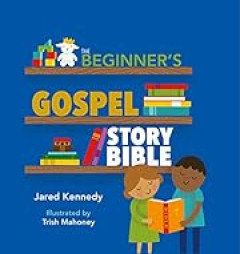
The Beginner's Gospel Story Bible
Kids know the value of a promise. Our good and all-powerful God always keeps his word, and the way he fulfills his promises is better than anyone could have imagined! The Beginner's Gospel Story Bible traces God's perfect promises for toddlers and preschoolers through Fifty-two Old and New Testament stories. Even the youngest kids will come to know that God's promises are especially for them an…
- Edition
- -
- ISBN/ISSN
- 978-1-945270-04-8
- Collation
- Hard Cover, 320 hlm, 22,3x22,2cm
- Series Title
- Religion/ Christian Life/ Family
- Call Number
- F 225.9 K357 C1

On the Passion of Christ According to the Four Evangelists: Prayers and Medit…
A perfect complement to the movie, The Passion of The Christ, this book presents reflections that will enable the reader to focus deeply on the true meaning of the Passion. In his famous spiritual classic, The Imitation of Christ, Thomas a Kempis reminds the reader that in order to become a follower of Christ one must imitate his life, and to accomplish this he adds: "Let it then be our main co…
- Edition
- 1
- ISBN/ISSN
- 9780898709933 / 0898709938
- Collation
- Softcover; 168 hlm.; 13.41 x 20.27 cm
- Series Title
- -
- Call Number
- F 232.96 K328 C1

The Imitation of Christ
A Kempis lived as intentionally as he wrote. We must turn away from the things of this world., we must live sacrificially, we must be inundated with Christ's passionate teaching, and we must pray to be removed from distration. A classic in every sense of the word, "The Imitation of Christ" places the fruit of one man's single minded devotion to God's calling on his life within the reach of ever…
- Edition
- -
- ISBN/ISSN
- 9780802456533
- Collation
- Softcover; 384 hlm.; 12.7 x 17.5 cm
- Series Title
- -
- Call Number
- F 242 K328 C1

Vera Sapientia, or True Wisdom
Christian monk and mystic Thomas Hemerken, aka THOMAS À KEMPIS (1380-1471), wrote The Imitation of Christ, the second most important book, after the Bible, in Christian philosophy. But he also penned numerous other works of devotion, including this previously hard-to-find collection of contemplations for sincere, dedicated believers. Discover, in this 1904 translation. . the severe judgment of…
- Edition
- -
- ISBN/ISSN
- 1602060169
- Collation
- Softcover; 214 hlm.; 12.7 x 20.3 cm
- Series Title
- -
- Call Number
- F 210 K328 C1
 Computer Science, Information & General Works
  Philosophy & Psychology
  Religion
  Social Sciences
  Language
  Pure Science
  Applied Sciences
  Art & Recreation
  Literature
  History & Geography