Filter by
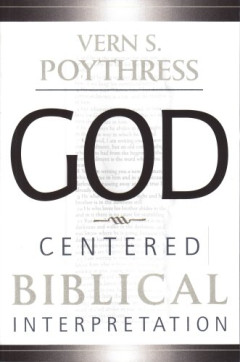
God Centered Biblical Interpretation
Theologically and pastorally profound, this study of biblical hermeneutics builds on Trinitarian presuppositions, while exposing the idols that lead interpretation astray. Poythress emphasizes the interpreter's spiritual qualifications along with linguistic principles.
- Edition
- -
- ISBN/ISSN
- 9780875523767
- Collation
- Softcover; 238 hlm.; 15 x 22 cm
- Series Title
- -
- Call Number
- F 220.601 P892 C1

Redeeming Science: A God-Centered Approach
These and other points of contention cause some Christians to view science as a threat to their beliefs. Redeeming Science attempts to kindle our appreciation for science as it ought to be-science that could serve as a path for praising God and serving fellow human beings.
- Edition
- -
- ISBN/ISSN
- 9781581347319
- Collation
- Softcover, 381 hlm, 15.2 x 22.8 cm
- Series Title
- -
- Call Number
- F 261.55 P892 C1
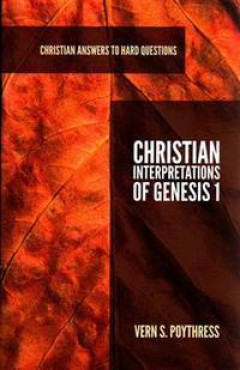
Christian interpretations of Genesis 1
Several interpretations of Genesis and scientific evidence endeavor to demonstrate harmony: among them young-earth creationism, mature creation, the day-age theory, the analogical-day theory, and the framework hypothesis. Vern Poythress explores which is best. "Though brief, this booklet is informed, irenic and instructive. It covers all the bases in an extremely readable style, and all side…
- Edition
- 1
- ISBN/ISSN
- 9781596386860
- Collation
- Softcover; 32 hlm.; 13.97 x 21.59 cm
- Series Title
- Christian Answers to Hard Questions
- Call Number
- R 231.7652 P892 C1
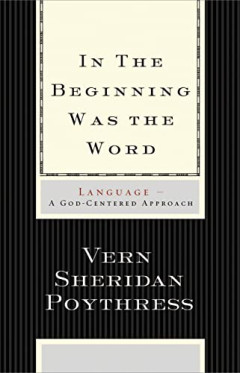
In the Beginning Was the Word: Language-A God-Centered Approach
Language is not only the centerpiece of our everyday lives, but it gives significance to all that we do. It also reflects and reveals our all-sustaining Creator, whose providential governance extends to the intricacies of language. Writes Vern Poythress, "God controls and specifies the meaning of each word-not only in English but in Mandarin Chinese, Hindi, Italian, and every other language. Wh…
- Edition
- -
- ISBN/ISSN
- 9781433501791
- Collation
- Softcover; 415 hlm.; 15.2 x 22.8 cm
- Series Title
- -
- Call Number
- F 230.014 P892 C1
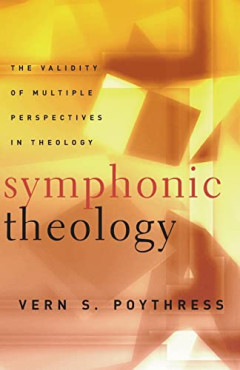
Symphonic Theology: The Validity of Multiple Perspectives in Theology
The truth of God is rich and multifaceted. Though a coherent body of revelation, the Bible comes to us through a variety of inspired authors, metaphors, and themes highlighting the many facets of God's truth. Likewise, our theological formulations capture manifold emphases--distinct perspectives on the whole--which collectively enable us to gain a fuller understanding of the truth. Poythress ex…
- Edition
- -
- ISBN/ISSN
- 9780875525174
- Collation
- Softcover; 128 hlm.; 14 x 21 cm
- Series Title
- -
- Call Number
- F 230.01 P892 C1

Inerrancy and Worldview: Answering Modern Challenges to the Bible
Though the Bible presents a personal and relational God, popular modern worldviews portray an impersonal divine force in a purely material world. Readers influenced by this competing worldview hold assumptions about fundamental issues―like the nature of humanity, evil, and the purpose of life―that present profound obstacles to understanding the Bible. In Inerrancy and Worldview, Dr. Vern Po…
- Edition
- -
- ISBN/ISSN
- 9781433523878
- Collation
- Softcover; 170 hlm.; 15 x 23 cm
- Series Title
- -
- Call Number
- R 220.132 P892 C1

God in Patristic Thought
This book assembles the evidence for what the Greek Fathers, the men whose constructive thought underlies the creeds, really thought and taught about the nature of God. It shows that they were original thinkers, with a profound reverence for the text of the Scriptures, and minds keenly trained to discuss what ultimate truths were expressed in the scriptural text and what reality should be ascri…
- Edition
- -
- ISBN/ISSN
- 9781556357794
- Collation
- Softcover; 318 hlm.; 14 x 21.5 cm
- Series Title
- -
- Call Number
- F 231 P936 C1

The Power of Prayer: The New York Revival of 1858
The Autumn of 1857 saw New York in the midst of financial failure which ruined many of its one million people. J.W. Alexander, returning there from Europe, found ‘a pall of mourning over every house’. But, unlike other times of national disaster this era was accompanied by a renewed spirit of prayer to be followed by a manifestation of the ‘marvellous lovingkindness’ of God as thousands…
- Edition
- -
- ISBN/ISSN
- 0851516025
- Collation
- Softcover
- Series Title
- -
- Call Number
- F 248 P953 C1

Gathered for Power
- Edition
- -
- ISBN/ISSN
- 9780819211309 / 0819211303
- Collation
- Softcover; 142 hlm.; 13.6 x 21.5 cm
- Series Title
- -
- Call Number
- F 283.092 P981 C1
- Edition
- -
- ISBN/ISSN
- 9780819211309 / 0819211303
- Collation
- Softcover; 142 hlm.; 13.6 x 21.5 cm
- Series Title
- -
- Call Number
- F 283.092 P981 C1

Anugerah Tuhan & Kebijaksanaan Hidup: Tujuh Renungan Tentang Perumpamaan Anak…
Buku ini tidak hanya terdiri dari tujuh renungan tentang perumpaan anak yang hilang tetapi juga diawali dengan dua renungan tentang dua perumpamaan, yakni domba yang hilang dan dirham yang hilang, yang dicatat dalam Lukas 15:1-10.
- Edition
- 1
- ISBN/ISSN
- 9786023931545
- Collation
- Softcover; 176 hlm.; 14 x 21 cm
- Series Title
- -
- Call Number
- F 248.4 U541 C1
 Computer Science, Information & General Works
  Philosophy & Psychology
  Religion
  Social Sciences
  Language
  Pure Science
  Applied Sciences
  Art & Recreation
  Literature
  History & Geography