Filter by

The Revelation of God: Contours of Christian Theology
"~In modern times the Christian faith's claim to possess a unique revelation of God has faced numerous challenges. A central issue has been the role of the Bible. While some have continued to defend the view that the Bible, inspired by God, is God's self-revelation in a direct way, others, have argued that God's self-revelation is to be found primarily in divine action or in the person of Jesus…
- Edition
- -
- ISBN/ISSN
- 9780830815388
- Collation
- Softcover, 304 hlm, 15x23cm
- Series Title
- -
- Call Number
- R 231.74 J548 C1
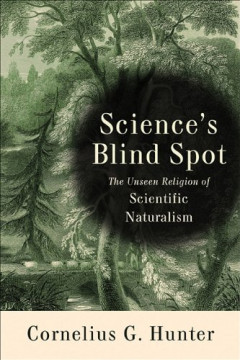
Science's Blind Spot: The Unseen Religion of Scientific Naturalism
Had evolutionists been in charge, they wouldn't have made the mosquito, planetary orbits would align perfectly, and the human eye would be better designed. But they tend to gloss over their own failed predictions and faulty premises. Naturalists see Darwin's theories as "logical" and that's enough. To think otherwise brands you a heretic to all things wise and rational. Science's Blind Spot tak…
- Edition
- -
- ISBN/ISSN
- 9781587431708
- Collation
- Softcover; 170 hlm.; 16.81 x 22.76 cm
- Series Title
- -
- Call Number
- F 201.65 H945 C1

The Pastor's Book
Pastors are tasked with the incredibly demanding job of caring for the spiritual, emotional, and, at times, physical needs of their people. While seminary is helpful preparation for many of the challenges pastors face, there's far more to pastoral ministry than what can be covered in the classroom. Designed as a reference guide for nearly every situation a pastor will face, this comprehensive b…
- Edition
- -
- ISBN/ISSN
- 9781433545870
- Collation
- Hardcover; 592 hlm.; 16.26 x 23.62 cm
- Series Title
- -
- Call Number
- R 253 H894 C1

Putting Amazing Back Into Grace: Who Does What in Salvation?
Here is the quintessence of the gospel, the new wine of God's kingdom at its purest for us today! Read, mark, learn, and inwardly digest Putting Amazing Back into Grace. - J. I. Packer (from the foreword) This book contains much biblical wisdom and is a welcome antidote to the cultural Christianity that has infiltrated even evangelical circles. - Donald G. Bloesch If there is any confusio…
- Edition
- -
- ISBN/ISSN
- 0801043913
- Collation
- Softcover; 319 hlm.; 15.2 cm x 22.8 cm
- Series Title
- 1991
- Call Number
- F 234 H823 C1

Made in America: The Shapping of Modern American Evangelicalism
There is a "crisis of truth in our time", asserts Michael Horton, "even in our evangelical church. And it is due at least in part to our cultural accommodation." Horton believes the time has come to call evangelicals back to faith and truth.
- Edition
- -
- ISBN/ISSN
- 9780801043543 / 0801043549
- Collation
- Softcover; 198 hlm.; 15 x 22 cm
- Series Title
- -
- Call Number
- F 270.829 H823 C1
Covenant and Eschatology: The Divine Drama
In this innovative work in theological method and hermeneutics, Michael S. Horton uses the motif of the covenant as a way of binding together God's "word" and God's "act." Seeking an integration of theological method with the content of Christian theology, Horton emphasizes God's covenant as God's way of working for redemption in the world. Horton maintains a substantial dialogue with important…
- Edition
- 1
- ISBN/ISSN
- 0664225012
- Collation
- Softcover; 360 hlm.; 15.44 x 23.11 cm
- Series Title
- -
- Call Number
- R 230 H823 C1
New Studies in Dogmatics: Justification, Vol. 1
The first of a two-volume project delving into the doctrine of justification. Michael Horton seeks not simply to recover a clear message of its role in modern Reformed theology, but also to bring a fresh discovery of the gospel in a time when contemporary debates around justification have reignited. The doctrine of justification stands at the center of our systematic reflection on the meanin…
- Edition
- 1
- ISBN/ISSN
- 9780310491606
- Collation
- 99 hlm. ; 23 cm
- Series Title
- New Studies in Dogmatics
- Call Number
- R 234.7 H823 C1
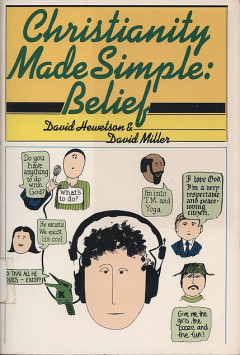
Christianity Made Simple: Belief
- Edition
- -
- ISBN/ISSN
- 0-87784-811-4
- Collation
- Soft Cover, 160 hlm, 20.9x14cm
- Series Title
- -
- Call Number
- F 230 H598 C1
- Edition
- -
- ISBN/ISSN
- 0-87784-811-4
- Collation
- Soft Cover, 160 hlm, 20.9x14cm
- Series Title
- -
- Call Number
- F 230 H598 C1
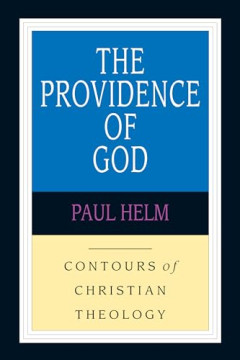
The Providence of God: Contours of Christian Theology
In this concise and accessible introduction, Paul Helm outlines for students and interested readers the doctrine of divine providence. Unlike many doctrinal treatments, his approach is not historically oriented. Instead Helm focuses on the underlying metaphysical and moral aspects of God's providence, paying particular attention to the ideas of divine control, providence and evil, and the role …
- Edition
- -
- ISBN/ISSN
- 9780830815333
- Collation
- Softcover, 246 hlm, 15x23cm
- Series Title
- -
- Call Number
- R 231.5 H47P C1

Theological Guide To Calvin's Institutes: Essays and Analysis
Twenty-one contributors, including some leading Calvin scholars, provide a groundbreaking section-by-section analysis of John Calvin’s Institutes of the Christian Religion. They supply essential background information; further develop Calvin’s discussions of topics including prayer, ethics, faith, assurance, and church and state government; and conclude with a valuable bibliography of Calvi…
- Edition
- -
- ISBN/ISSN
- 9781596380912
- Collation
- Hard Cover, 616 hlm, 15 x 23 cm
- Series Title
- -
- Call Number
- F 230.42 H175 C1
 Computer Science, Information & General Works
  Philosophy & Psychology
  Religion
  Social Sciences
  Language
  Pure Science
  Applied Sciences
  Art & Recreation
  Literature
  History & Geography